The value of a fund's assets minus its liabilities, divided by the number of shares outstanding. Funds typically calculate it once per business day after the market close.
Covered in: Why ETFs Surface Liquidity Constraints Faster Than Mutual Funds · How ETFs Actually Trade (book)
Related terms
Go deeper: books by Will Lee, CFA
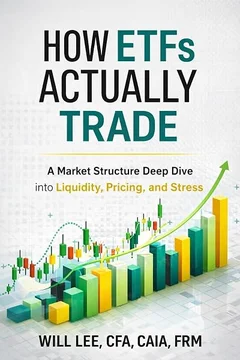
For traders, PMs, and ETF specialists: a practitioner's deep dive into APs, market makers, NAV vs. iNAV, and trading under stress.
Get the ETF Liquidity Cheat Sheet
Subscribe to receive a free two-page ETF Liquidity Cheat Sheet, plus an occasional email when a new explainer is published.
No spam. Unsubscribe anytime.
Disclaimer
This material is provided for informational and educational purposes only and does not constitute investment advice, a recommendation, or an offer to buy or sell any security.
All views expressed are the author’s own and do not represent the views of any employer or affiliated organization.