A tokenized ETF, in the narrow sense used on this page, is a registered exchange-traded fund whose shares can be recorded and transferred on a distributed ledger, while remaining shares of the same fund. The same phrase is also used more loosely for other products, including exchange-traded products that hold crypto assets and third-party tokens that reference a fund or a stock but are not themselves shares of that issuer.
Covered in: Tokenized Money and the Future of Financial Plumbing (book)
How it trades
If the tokenized record is an issuer-sponsored format of the ETF's own shares, those shares still represent an interest in the same portfolio and still have an official net asset value. You may still buy and sell them on a national securities exchange during exchange hours at a bid and an ask, and authorized participants can still create or redeem larger blocks with the fund. A transfer agent may keep the official ownership record, in whole or in part, on a distributed ledger and may allow a holder to convert between a traditional book-entry position and a tokenized format of the same class, typically one-for-one. The ledger is a way to record and transfer the shares; it does not, by itself, change what the fund owns or how official NAV is calculated. Tokenized trading or settlement, where it is offered, depends on approved rules and on the fund's own arrangements, and it is not automatic for every ETF. Selling shares on the exchange is still a trade with another investor, not a redemption from the fund. See also: Exchange-traded fund (ETF) · ETF share class · Creation and redemption · NAV vs market price.
A simple conversion illustration
Hypothetical figures, for arithmetic only; not a live fund.
Suppose you hold 100 shares of an ETF in a traditional brokerage account, and the fund's most recent official NAV is $50.00. If the fund and its transfer agent allow a conversion into a tokenized format of the same share class, you would still hold 100 shares of the same fund, with the same official NAV of $50.00 per share. The change is the form of the ownership record, not a new portfolio or a new number of shares.
A different product that merely tracks the same ETF's price, or that a third party issues as a wrapper or contract on the fund, is not this conversion. That product may not be a share of the fund and may not carry the same rights.
Key points
- In the narrow sense, tokenization of an ETF is about how the shares are recorded and transferred, not about a new set of holdings. The shares remain shares of a registered fund.
- A single share class can exist in more than one format, and a fund may allow conversion between a traditional book-entry position and a tokenized format. That format change is not, by itself, a new share class, and it is not the same thing as an ETF share class of a fund that also offers mutual fund classes.
- An exchange-traded fund or other exchange-traded product that holds bitcoin or another crypto asset is a statement about what the product owns. That is different from recording the product's own shares on a distributed ledger. A product can be one, the other, both, or neither; the prospectus is the place to check.
- Some platforms offer "tokenized stocks" or "tokenized ETFs" that a third party creates. Those instruments may be a custodial claim, a receipt, or a contract that tracks a price, and they may not be shares of the named issuer. They may not carry the same voting, distribution, or other rights, and they may not be registered or qualified for sale to a given investor, including in the United States.
- Whether a given ETF actually offers a tokenized record, and on what terms, is still developing and depends on the fund's arrangements and on approved rules. Tokenized recording does not, by itself, change official NAV, extend exchange trading hours, or replace creation and redemption with the fund.
Common questions
- How is a tokenized ETF different from an ETF or other product that holds bitcoin or another crypto asset?
- They answer different questions. A tokenized ETF, in the narrow sense, is about the share record: the fund is still a registered exchange-traded fund, and a distributed ledger is used, in whole or in part, to record or transfer its shares. An exchange-traded fund or other exchange-traded product that holds bitcoin or another crypto asset is about the portfolio: the crypto asset is what the product owns. Some of those products are registered investment companies; others use a different exchange-traded structure. Holding a crypto asset does not, by itself, make the shares tokenized, and recording the shares on a ledger does not, by itself, mean the fund owns a crypto asset. The prospectus states both what the product holds and how its shares are issued and recorded. See also: Exchange-traded fund (ETF) · NAV vs market price.
- How is a tokenized ETF share different from a third-party "tokenized ETF" or "tokenized stock"?
- If the fund, or its agent, tokenizes its own shares, the token is a format of those shares: the holder has an interest in the same registered fund, typically with the same rights as other holders of that class, and may be able to convert back to a traditional book-entry position. A third party unaffiliated with the fund or the stock issuer may instead issue its own instrument that references that fund or stock. That instrument may be a custodial claim on an underlying position the third party holds, or it may be a contract that tracks a price, such as a receipt or a derivative. It may not be a share of the named issuer, may not carry the same voting or distribution rights, and can expose the holder to the third party's own credit or operational risk. Some of these products are offered on offshore platforms and may not be registered or qualified for sale to U.S. investors. The legal form, the rights, and the offering documents—not the marketing label—are what matter. See also: ETF share class · Mutual fund.
- Does a tokenized record change how the shares are priced, created, or traded?
- Not by itself. Official NAV is still the fund's per-share value of its holdings, and the live market price can still differ from that NAV. Authorized participants can still create and redeem larger blocks with the fund, which is what keeps the market price aligned with value, subject to the same frictions as other ETFs. Ordinary investors who buy or sell on a national securities exchange still transact at a bid and an ask during that exchange's hours; a distributed-ledger record does not, by itself, extend those hours or guarantee around-the-clock trading or instant settlement. Where approved rules and the fund's arrangements allow a tokenized format, settlement of a transfer or a conversion between formats may be faster than standard securities settlement, but that path is not automatic, and it is not a substitute for reading the fund's own documents. See also: Creation and redemption · Secondary market · NAV vs market price.
This topic is also listed with other structure notes at For product managers, and in Related reading on the books page.
Related terms
Go deeper: books by Will Lee, CFA
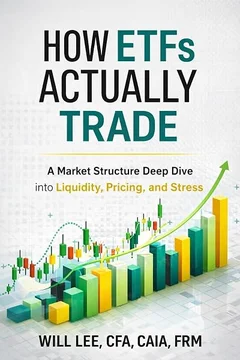
For traders, PMs, and ETF specialists: a practitioner's deep dive into APs, market makers, NAV vs. iNAV, and trading under stress.
Get the ETF trading checklist, plus course updates
A one-page checklist for reviewing an ETF's spread, underlying liquidity, and premium or discount before you trade. You'll also get a note when a new course module is published.
No spam. Unsubscribe anytime.
Disclaimer
This material is provided for informational and educational purposes only and does not constitute investment advice, a recommendation, or an offer to buy or sell any security.
All views expressed are the author’s own and do not represent the views of any employer or affiliated organization.