A closed-end fund is a registered investment company that typically issues a set number of shares in an offering and then, if it is listed, trades on an exchange at a market price, without daily creation and redemption of shares. An ETF also trades on an exchange, but authorized participants can create or redeem large blocks with the fund, which is what tends to keep the ETF's market price near net asset value; a closed-end fund has no such ongoing mechanism, so a premium or discount can be large and can last.
How it trades
A listed closed-end fund usually comes to market through an initial public offering of a fixed number of shares. Offering costs are often paid from the proceeds, so net asset value per share can start below the offering price. After the offering, you buy and sell the shares on an exchange at a bid and an ask, just as you would an ETF. Official NAV is still the per-share value of the portfolio, typically calculated each business day, but the market price can sit well above or well below that NAV and can stay there. There is no authorized participant creating new shares when the price is at a premium, or redeeming shares when it is at a discount, so nothing in the structure automatically supplies or removes shares to close that gap. The share count can later change through a follow-on or rights offering, a share repurchase, or a dividend-reinvestment plan, but those are occasional events, not a daily arbitrage path.
An ETF's share count can change every day through creation and redemption. When the market price moves far enough above the value of the holdings, an authorized participant can deliver a basket or cash to the fund, receive new shares, and sell them; when the price moves far enough below, it can buy shares, redeem them, and receive the basket or cash. That activity tends to keep the ETF's market price near NAV, though a premium or discount can still appear when hedging or create-and-redeem is costly. A traditional mutual fund is different from both: investors generally buy shares from the fund and sell them back to the fund at official NAV, typically once each business day, and the shares do not trade on an exchange.
Closed-end funds may use leverage more often than open-end mutual funds and most ETFs. A registered closed-end fund may issue debt or preferred shares, subject to asset-coverage tests in the Investment Company Act—generally at least 300% asset coverage for debt and 200% for preferred stock. Open-end funds, including most ETFs, generally may not issue preferred stock and may borrow only from a bank, with at least 300% asset coverage. Leverage can increase both gains and losses and can make the share price more volatile; not every closed-end fund uses it. That fund-level leverage is also different from a leveraged ETF, which typically seeks a multiple of a one-day return using derivatives.
Many closed-end funds follow a managed distribution policy: they aim to pay a set amount on a regular schedule. Those payouts can include income and realized gains, and they can also include a return of capital. As with other registered funds, a distribution that includes sources other than net income must come with a written statement, often called a 19(a) notice, that estimates those sources. The notice is an estimate; the final tax character is generally reported after year-end. This is general information, not tax advice. Consult a tax professional. See also: Creation and redemption · ETF arbitrage · Premium / discount · Mutual fund.
Key points
- A listed closed-end fund typically issues a set number of shares in an IPO and then trades on an exchange. The share count does not change through daily creation and redemption.
- Because there is no ongoing authorized-participant arbitrage, the market price can stand at a large premium or discount to NAV for a long time. Buying at a premium means paying more than the portfolio's per-share value; selling at a discount means receiving less.
- An ETF also trades on an exchange throughout the day, but authorized participants can create or redeem large blocks with the fund. That is what tends to keep the ETF's market price near NAV. A gap can still appear when create/redeem or hedging is costly.
- Closed-end funds may use fund-level leverage, including debt or preferred shares, subject to Investment Company Act asset-coverage tests. Leverage can increase both gains and losses. This is different from a leveraged ETF's typical daily-reset structure, and not every closed-end fund uses leverage.
- Many closed-end funds pay distributions on a set schedule. Those payouts can include a return of capital, which generally reduces NAV and, for tax purposes, cost basis. A 19(a) notice estimates the mix; the year-end tax form is the usual record. This is general information, not tax advice.
- Interval funds and tender-offer funds are also closed-end funds, but they are not the same as a listed closed-end fund and they are not ETFs. They typically offer limited, periodic repurchases rather than daily exchange trading or daily create-and-redeem.
Common questions
- What is the difference between a closed-end fund and an ETF?
- Both can trade on an exchange at a market price throughout the day, and both have an official net asset value for the portfolio. The structural difference is the share count. A closed-end fund typically issues a set number of shares in an offering and does not create or redeem shares each day with authorized participants, so the market price can drift away from NAV and stay there. An ETF's share count can rise or fall every day through creation and redemption, which is what tends to keep its market price near NAV. A traditional mutual fund is a third wrapper: investors usually buy from and sell back to the fund at NAV once a day, and the shares do not trade on an exchange. Closed-end funds may also use fund-level leverage more often, and many use a managed distribution policy. See also: Exchange-traded fund (ETF) · Mutual fund · Creation and redemption.
- Why can a closed-end fund trade at a large, lasting premium or discount?
- The market price is set by buyers and sellers on the exchange. Official NAV is the per-share value of the holdings. In an ETF, when those two drift far enough apart, authorized participants can create shares (which adds supply at a premium) or redeem shares (which removes supply at a discount), and that activity tends to pull the market price back toward NAV, after costs. A listed closed-end fund has no such daily path, so a premium or a discount can be wide and can last for months or longer. The share count can still change later through an offering or a repurchase, but those are occasional and do not replace ongoing arbitrage. A premium means you pay more than the portfolio's per-share value; a discount means you pay less, but you may also have to sell at a discount. See also: Premium / discount · NAV vs market price · ETF arbitrage.
- How are interval funds and tender-offer funds different from listed closed-end funds and from ETFs?
- They are legally closed-end funds, but they usually do not trade on an exchange all day the way a listed closed-end fund or an ETF does. An interval fund typically offers shares at a price based on NAV and, under SEC Rule 23c-3, offers to repurchase a limited portion of its shares—generally 5% to 25% of the shares outstanding—at NAV on a set schedule of every three, six, or twelve months. If more shares are tendered than the fund is offering to buy, the repurchase is generally prorated, so you may not be able to sell the full amount you wanted, and you may have to wait until the next interval. A tender-offer fund also repurchases shares from holders, but the timing and the amount are set by the fund in each offer rather than by that fixed interval rule. Neither structure has the daily create-and-redeem path that tends to keep an ETF near NAV, and neither gives you on-exchange liquidity every business day unless the particular fund is also listed. The prospectus states how, when, and at what price you can exit. See also: Mutual fund · Exchange-traded fund (ETF) · Net asset value (NAV).
Related terms
Go deeper: books by Will Lee, CFA
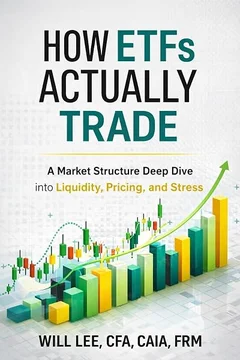
For traders, PMs, and ETF specialists: a practitioner's deep dive into APs, market makers, NAV vs. iNAV, and trading under stress.
Get the ETF trading checklist, plus course updates
A one-page checklist for reviewing an ETF's spread, underlying liquidity, and premium or discount before you trade. You'll also get a note when a new course module is published.
No spam. Unsubscribe anytime.
Disclaimer
This material is provided for informational and educational purposes only and does not constitute investment advice, a recommendation, or an offer to buy or sell any security.
All views expressed are the author’s own and do not represent the views of any employer or affiliated organization.