A fixed income ETF, or bond ETF, is an exchange-traded fund that holds bonds or other debt instruments. Its shares trade on an exchange throughout the day, while the official NAV is typically based on evaluated prices for bonds that trade over the counter, so the market price and the NAV can differ.
For why that gap can widen under stress — including lagging or bid-side evaluated prices — see Bond ETF discount.
Covered in: How ETFs Actually Trade (book)
Common questions
- How does a bond ETF's NAV differ from its market price?
- Most bonds trade over the counter, not on an exchange, and many do not trade every day. A bond ETF's official NAV is typically built from pricing-service evaluations of those bonds, often on the bid side of the OTC market, rather than from a last exchange trade. The ETF's shares, by contrast, trade throughout the day at a market price. In stressed markets, evaluated prices can lag and premiums or discounts often widen. In that setting the live ETF price can be the more current signal of where the bonds can actually be traded, and a wide gap is not, by itself, proof that the ETF has failed. Illustration: if official NAV is $100.00 and the midpoint is $99.20, the market price is 80 cents, or 80 basis points, below NAV—an 80 bp discount. Hypothetical figures, for arithmetic only. See also: NAV vs market price · Premium / discount · Price discovery · Bond ETF discount.
- How do bond ETFs create and redeem shares?
- Authorized participants can create or redeem a bond ETF in kind, in cash, or with a mix. Because a broad bond portfolio may include issues that trade infrequently, the fund often uses a custom or representative basket rather than a pro rata slice of every holding, and an index bond ETF often holds a representative sample of its index rather than every bond. A cash create or redeem means the fund itself buys or sells bonds; an in-kind trade moves a basket of bonds and may include a cash balancing amount. The quality and liquidity of that basket still set how tightly the market price can track value. See also: Custom basket · Cash creation and redemption · In-kind transfer.
- Why can a bond ETF trade more than its underlying bonds?
- ETF shares trade on an exchange throughout the day. Many of the individual bonds in the portfolio may not trade at all on a given day in the OTC market. Buying or selling the ETF in the secondary market does not, by itself, require anyone to trade every underlying bond. That is why an ETF can show substantial share volume even when the underlying bonds are less active, and why tradable liquidity still depends on those bonds when creations, redemptions, or hedges need them. See also: Underlying liquidity · ETF liquidity · Why ETF Liquidity Is Not the Same as AUM.
Related terms
Go deeper: books by Will Lee, CFA
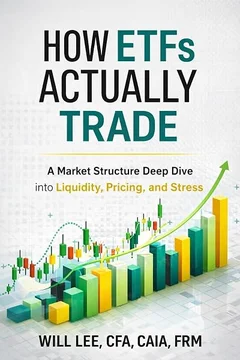
For traders, PMs, and ETF specialists: a practitioner's deep dive into APs, market makers, NAV vs. iNAV, and trading under stress.
Get the ETF trading checklist, plus course updates
A one-page checklist for reviewing an ETF's spread, underlying liquidity, and premium or discount before you trade. You'll also get a note when a new course module is published.
No spam. Unsubscribe anytime.
Disclaimer
This material is provided for informational and educational purposes only and does not constitute investment advice, a recommendation, or an offer to buy or sell any security.
All views expressed are the author’s own and do not represent the views of any employer or affiliated organization.